
Elements of Music
The elements of music are the fundamental building blocks that musicians use to create, understand, and interpret music. Each element plays a crucial role in shaping the overall sound and experience of a musical piece. By familiarizing students and ourselves with these elements, we can develop a deeper appreciation for music, analyze its components more effectively, and enhance our own composition and performance skills.

Rhythm
Why It Matters: Rhythm gives music its structure and flow, guiding how a piece moves and how it feels.
What It Is: Rhythm refers to the timing of sounds and silences in music. It includes the beat, tempo, and patterns of duration.
Dynamics
Why It Matters: Dynamics add expression and emotion to music, helping to convey feelings and create contrasts.
What It Is: Dynamics describe the volume of music, indicating how loud or soft it should be played.


Melody
Why It Matters: Melody is what we usually hum or sing along to, making it one of the most memorable aspects of music.
What It Is: Melody is a sequence of notes that are perceived as a single, coherent entity. It is often the main theme or tune of a piece.
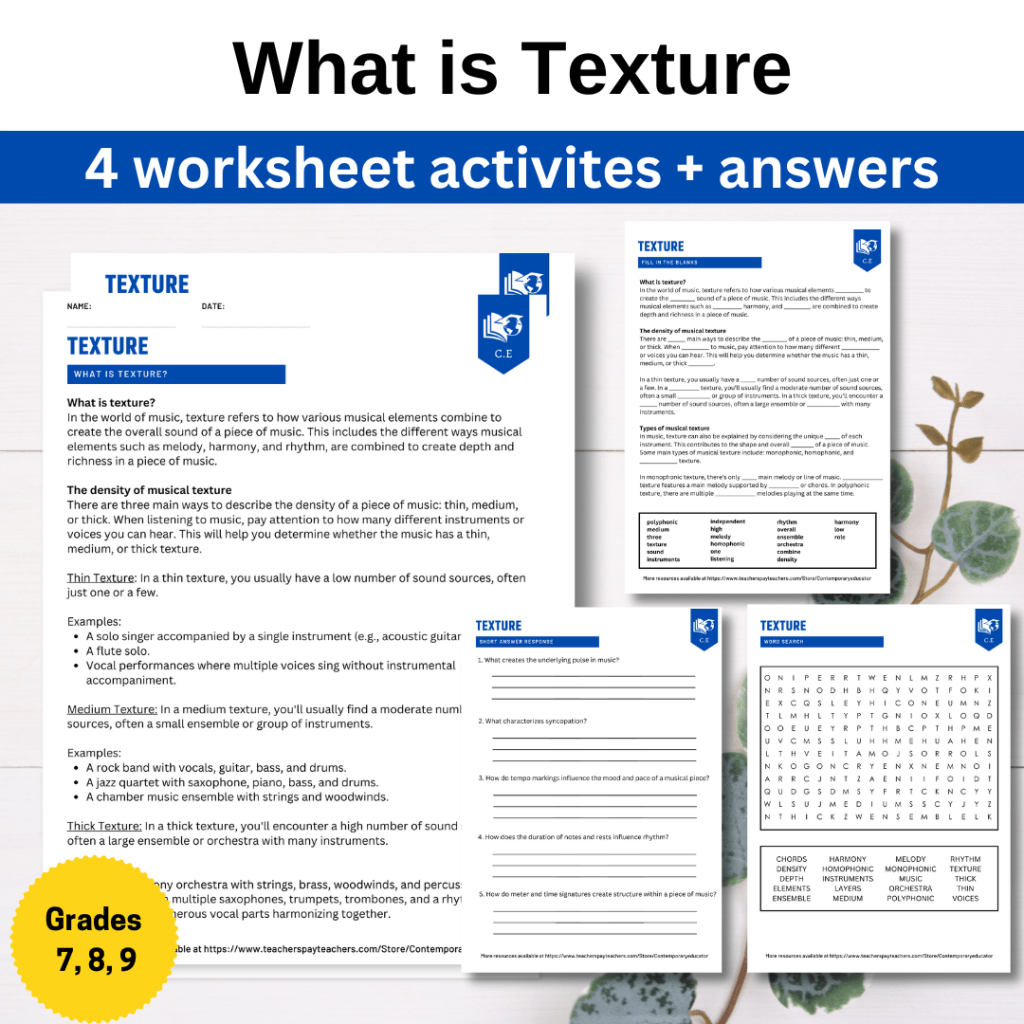
Texture
What It Is: Texture refers to how multiple layers of sound within a piece of music interact. It can be monophonic (single melody), polyphonic (multiple independent melodies), homophonic (melody with accompaniment), or heterophonic (variations of a single melody).
Why It Matters: Texture affects the complexity and richness of music, influencing how full or intricate a piece sounds.

Tone Color (Timbre)
Why It Matters: Timbre allows us to identify different instruments and voices, adding variety and character to music.
What It Is: Tone color, or timbre, is the quality of sound that distinguishes different instruments or voices.
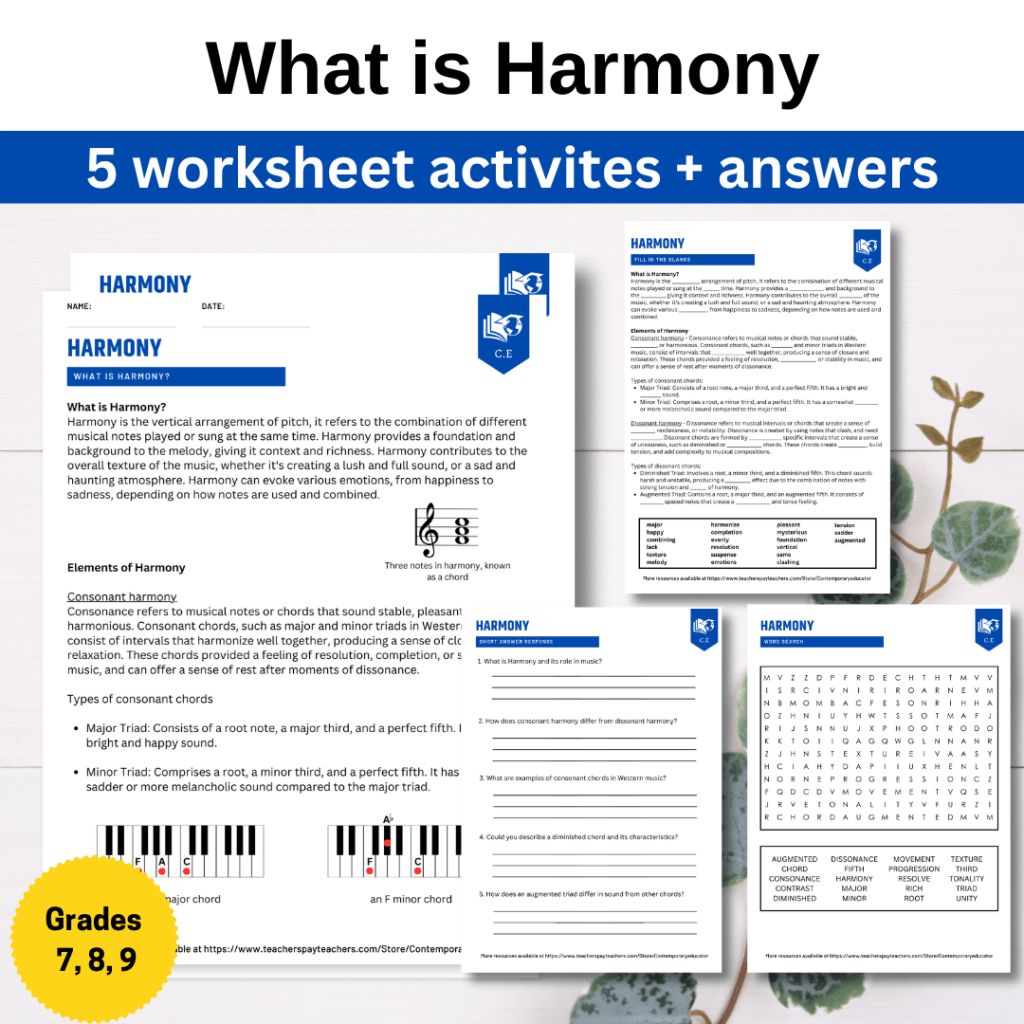
Harmony
Why It Matters: Harmony adds depth and context to the melody, enriching the overall sound and creating emotional resonance.
What It Is: Harmony involves the combination of different notes played or sung simultaneously to produce chords and chord progressions.
Form
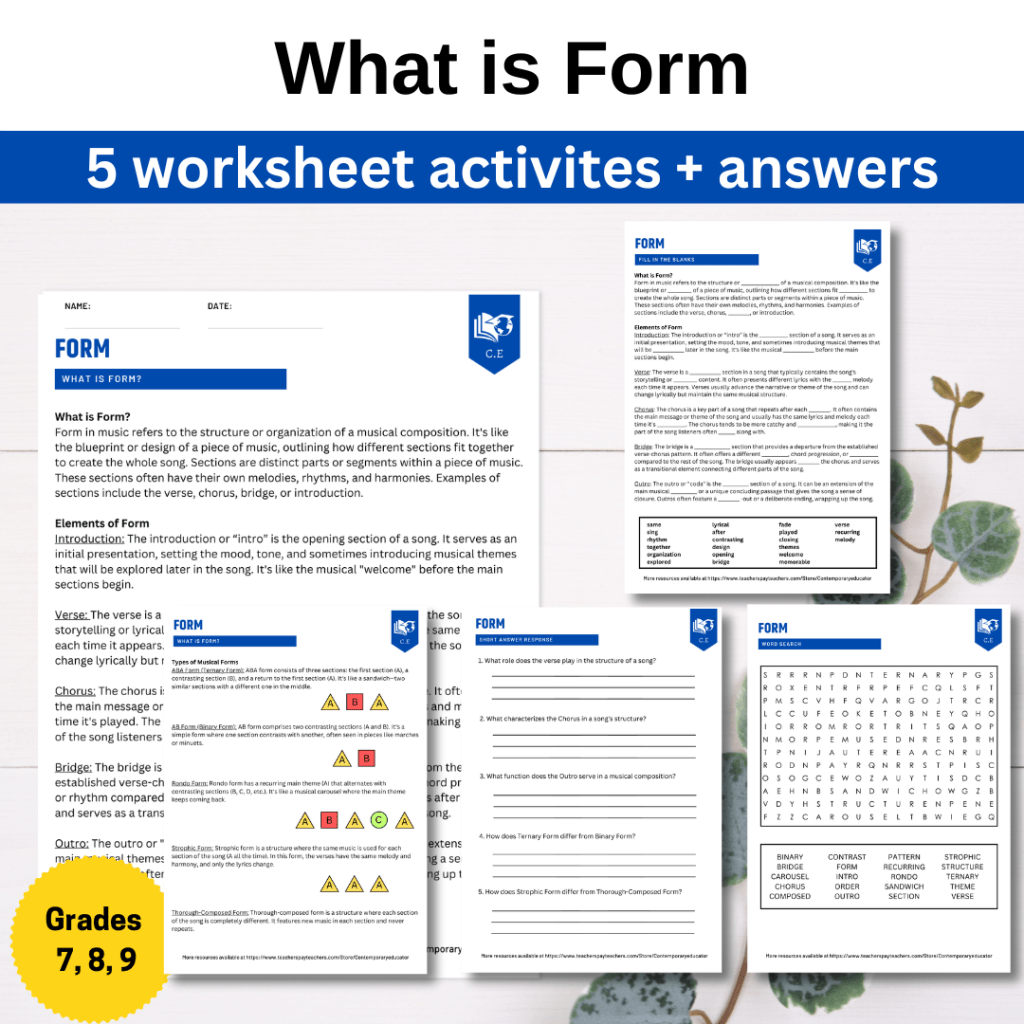
Why It Matters: Form helps organize music, providing a framework that guides the listener through the piece and creating coherence.
What It Is: Form is the structure of a musical composition, outlining its sections and the order in which they appear.
-

Now available on Teachers Pay Teachers! -
Now available on Teachers Pay Teachers! -
Now available on Teachers Pay Teachers! -
Now available on Teachers Pay Teachers! -
Now available on Teachers Pay Teachers! -
Now available on Teachers Pay Teachers!
Subscribe
Enter your email below to receive updates.
 Contemporary Educator