
Rhythm: Elements/Concepts of Music
Rhythm is the backbone of music, providing structure and pace. It’s the element that makes us tap our feet, dance, and feel the groove. Let’s explore what rhythm is and break down its essential elements: beat, syncopation, tempo, meter, duration, and rests.
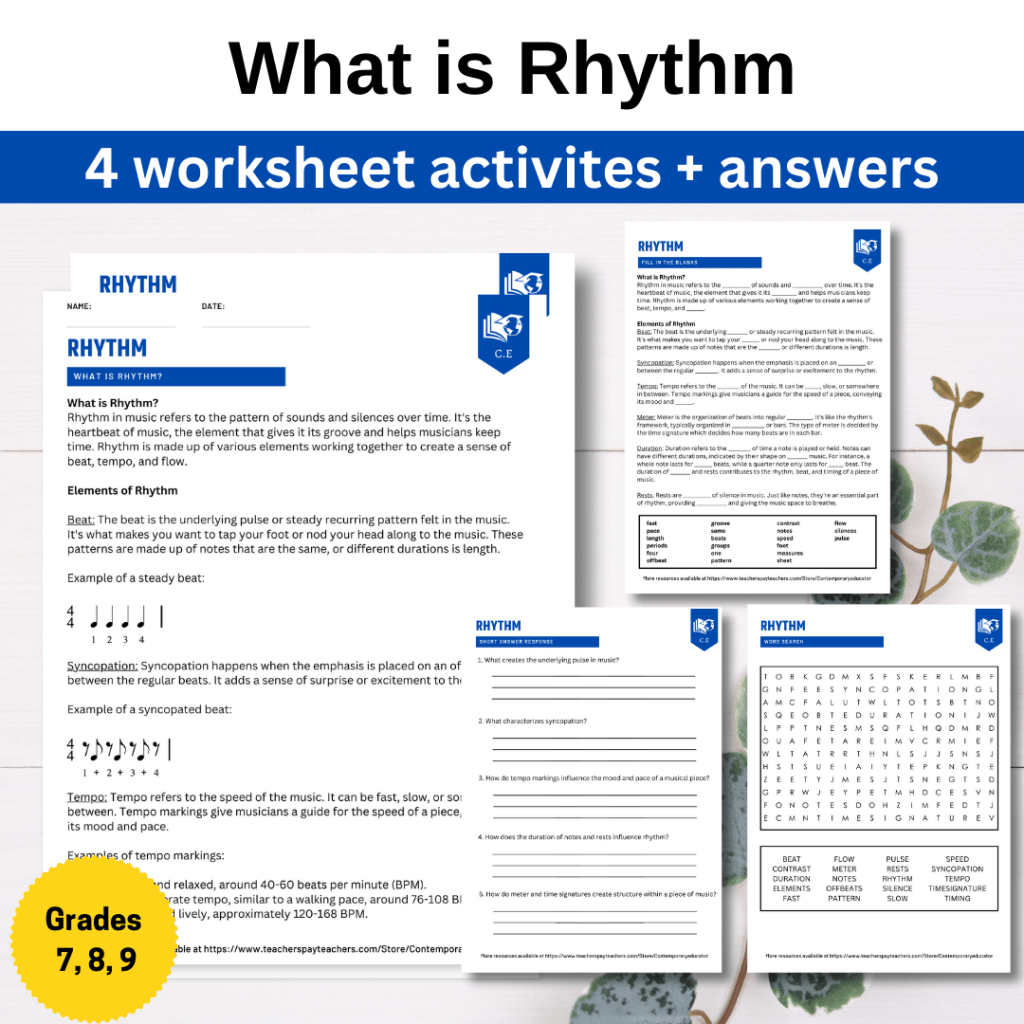

Support the content of this page with a worksheet set.

What is Rhythm?
Rhythm is the pattern of sounds and silences in music. It organizes musical sounds in time, giving a piece its distinct flow and movement. Rhythm is created by varying the length and accentuation of notes and rests, creating a dynamic interplay of sound and silence.
1. Beat The beat is the basic unit of time in music, the steady pulse that you feel. It’s what you tap your foot to when listening to a song. Beats can be strong or weak, creating the foundation for more complex rhythmic patterns.
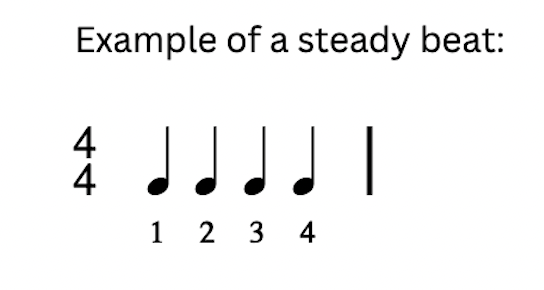
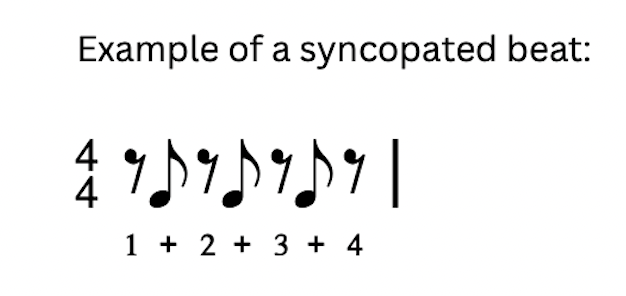
2. Syncopation Syncopation involves placing emphasis on beats or parts of beats that are typically weak or unaccented. This creates an unexpected, offbeat rhythm that adds complexity and excitement to the music.
3. Tempo Tempo refers to the speed at which a piece of music is played. It’s usually measured in beats per minute (BPM). A faster tempo means more beats per minute, while a slower tempo means fewer beats per minute.
Examples of tempo markings:
- Largo: Slow and relaxed, around 40-60 beats per minute (BPM).
- Andante: Moderate tempo, similar to a walking pace, around 76-108 BPM.
- Allegro: Fast and lively, approximately 120-168 BPM.

4. Meter Meter is the grouping of beats into regular, repeating patterns, typically in sets of 2, 3, or 4. These patterns are indicated by time signatures in written music, which show how many beats are in each measure and which note value gets the beat.
Examples of time signatures:
- 2/4 (2 beats per bar)
- 3/4 (3 beats per bar)
- 4/4 (4 beats per bar)

5. Duration Duration refers to the length of time a note or rest is held. Different note values (whole, half, quarter, eighth, etc.) indicate different durations, contributing to the rhythm’s complexity.

6. Rests Rests are periods of silence in music, indicated by symbols in written notation. Just like notes, rests have different values indicating how long the silence should last. Rests are essential for creating rhythm and allowing for moments of pause and reflection in music.

Conclusion
Rhythm is a vital element of music, providing structure and movement. By understanding its components—beat, syncopation, tempo, meter, duration, and rests—we can appreciate the intricate patterns that make music engaging and dynamic. These elements work together to create the ebb and flow of sound that drives musical expression and enjoyment. So next time you listen to a piece of music, pay attention to the rhythm and how it shapes your experience.


You may also be interested in our Music Fundamental Value Bundles.
 Contemporary Educator
Leave a comment