
Cubism is one of the most influential and revolutionary art movements of the 20th century, characterized by its abstract approach to depicting subjects from multiple viewpoints. Pioneered by Pablo Picasso and Georges Braque, Cubism broke away from traditional perspective and representation, transforming the way artists perceive and portray the world. This blog post explores the origins, key features, time periods, and notable artists associated with Cubism.


Support the content of this page with a worksheet set.
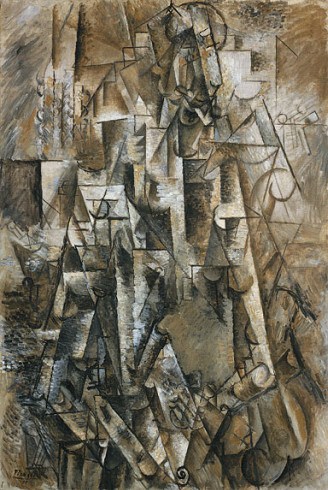
Origins and Time Periods
Cubism emerged in the early 20th century, with its beginnings traced back to around 1907. It can be divided into two main phases: Analytical Cubism and Synthetic Cubism.
Analytical Cubism (1907-1912):
This early phase focused on deconstructing objects into their basic geometric shapes and analyzing them from multiple perspectives. Artists used muted colors to emphasize the form and structure of their subjects, often creating fragmented and abstracted images.
Synthetic Cubism (1912-1914):
In this later phase, artists began to reassemble these fragmented shapes into more recognizable forms. They introduced brighter colors, varied textures, and incorporated elements such as collage, using materials like newspaper clippings and fabric. Synthetic Cubism aimed to create a synthesis of different views into a cohesive whole.
Key Features of Cubism
Collage and Mixed Media (Synthetic Cubism): Later Cubist works incorporated different materials and textures, blurring the lines between painting and sculpture. This use of collage added new dimensions to the artwork and highlighted the interplay between reality and representation.
Multiple Perspectives: Cubist artists depicted subjects from various angles simultaneously, challenging the traditional single-point perspective. This technique creates a sense of depth and dimensionality, as if the viewer can see all sides of an object at once.
Geometric Shapes: Objects are broken down into geometric shapes such as cubes, spheres, and cones. This abstraction emphasizes the underlying structure of the subject and departs from realistic representation.
Fragmentation: Subjects are fragmented into smaller parts and reassembled in abstract compositions. This fragmentation reflects the complexity of perception and the dynamic nature of reality.
Limited Color Palette (Analytical Cubism): Early Cubist works often used a subdued color palette, focusing on browns, grays, and earth tones. This allowed artists to concentrate on form and structure without the distraction of vibrant colors.


Pablo Picasso
Pablo Picasso (1881-1973) is widely regarded as one of the founders of Cubism. His groundbreaking work “Les Demoiselles d’Avignon” (1907) is often cited as the starting point of the movement. This painting’s radical departure from traditional perspective and its fragmented depiction of human figures shocked the art world and laid the foundation for Cubism.
Throughout his career, Picasso continued to innovate and push the boundaries of art. His Cubist works, such as “Ma Jolie” and “Girl with a Mandolin,” exemplify the analytical approach to deconstructing forms and exploring multiple viewpoints.
Georges Braque
Georges Braque (1882-1963) was a key figure in the development of Cubism, working closely with Picasso to pioneer the movement. His early works, influenced by Cézanne, evolved into Cubist masterpieces that emphasized geometric forms and multiple perspectives. Braque’s “Violin and Candlestick” and “Houses at L’Estaque” are iconic examples of Analytical Cubism.
Braque also played a crucial role in the transition to Synthetic Cubism. His use of collage and mixed media in works like “Fruit Dish and Glass” added new layers of meaning and texture, further expanding the possibilities of Cubist art.


Legacy of Cubism
Cubism fundamentally altered the course of modern art, influencing a wide range of artistic movements and styles, including Futurism, Constructivism, and Abstract Expressionism. Its emphasis on abstraction, multiple perspectives, and the deconstruction of forms paved the way for subsequent avant-garde movements and changed the way artists perceive and represent the world.
Conclusion
Cubism stands as a testament to the power of innovation and experimentation in art. By challenging traditional notions of perspective and representation, artists like Pablo Picasso and Georges Braque opened up new realms of possibility, forever changing the landscape of modern art. The legacy of Cubism continues to inspire and provoke thought, reminding us of the endless potential for creativity and exploration in the visual arts.


Support the content of this page with a worksheet set.
 Contemporary Educator
Leave a comment